EU court rules “Skype” is too similar to “Sky,” blocks trademark application
Mark Walton, for Ars Technica :
Would you confuse “Skype” with “Sky”? It’s tough, I know, but in attempting to trademark the Skype name and bubble logo, the General Court of the European Union has ruled that the name of Microsoft’s Skype is so similar to British broadcaster Sky the public is likely to confuse the two.
As a French law student, I was taught to have a high opinion of the CJEU, because of it’s role as the European Union’s Supreme Court, who punishes countries’ misdemeanor and EU’s law transgressions.
Obviously, this is not the case today.
I doubt that anyone previously confused Skype and Sky as the same entity before. Okay, both use the “Sky” word, and have some representation of a cloud in their trademark, but I doubt they are the only ones to do so. More so, Skype was founded in 2003 and was a pure European product : it was made by Swedes, Estonians, and Danes before it was bought by eBay in 2005.
The best conclusion possible to this decision was made by Walton himself :
For now, just be aware that talking into your Sky+ remote isn’t the way to make VOIP calls, and clicking the video icon in Skype won’t bring up the new season of Game of Thrones.
Was anyone this confused?
Passion Pit new album : Kindred
Last week, Passion Pit released their new album : Kindred. As a big fan of their work, you could expect my excitement when I saw it on Spotify’s recommendations. And boy was I disappointed! After the first listening, I just wondered what I just heard. This wasn’t the Passion Pit that I knew, who could make amazing songs like Sleepyhead and The Reeling. This was just another bland pop record for me.
But I couldn’t give up on it. And I was right to do so.
For me, Kindred might be the best Passion Pit album yet. Michael Angelakos do what he does the best : make catchy pop songs. And it shows in Lifted Up and My Brother Taught Me How To Swim (for me the 2 best titles in the album). Both are very catchy songs, with very ingenious electronic rhythms. The rest of the album is mostly good, with songs like Five Foot Ten using arcade game sounds (who give an interesting mix), Dancing On The Grave offering a melancholic tone, and Until We Can’t (Let’s Go) who makes you want to smash everything around you (great when you go for a run). And Angelakos voice is incredible, as usual. You keep wondering how he does it.
I’m not qualified to do a full review of the album, so all I can say is that if you know Passion Pit already, you should not be disappointed (and if you are, give the record another chance). If you aren’t, but you like bands like Foster The People, you should go listen it. And if you’re looking for some catchy songs, it’s for you.
Kindred is available on Spotify, Apple Music and iTunes.
Photos for OS X is here
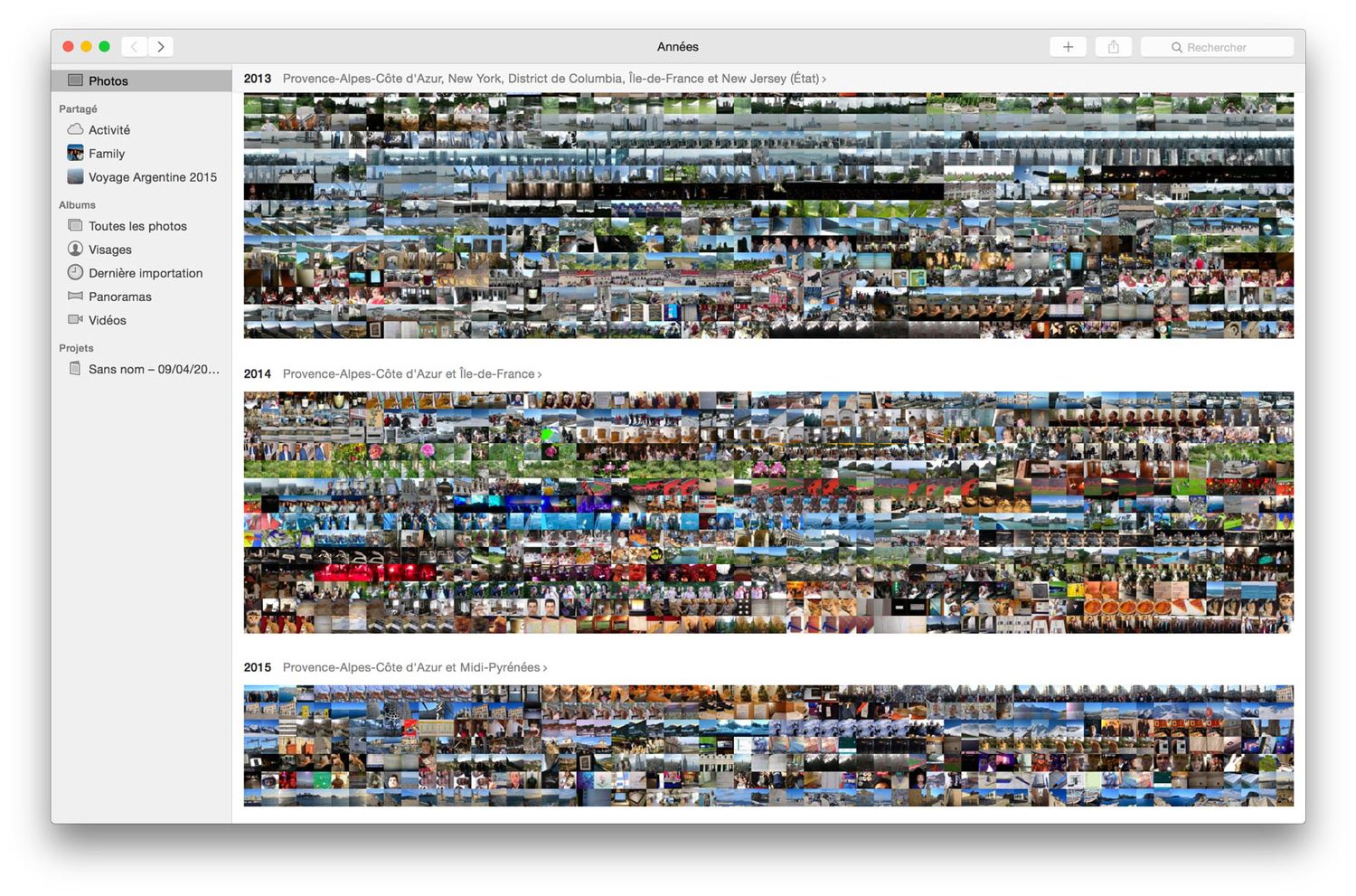 I previously talked about the Photos app for MacOS, during my search for a better photo management system. As I said, I previously used (and still use for backup) a combination of Dropbox and OneDrive to store my pictures, but some of them were on both Google Drive and Google Photos because I previously used an Android device, and I also used Picturelife and was getting ready to upload all of them to Amazon Cloud Photos (because Prime membership).
As you can imagine, this was not an ideal setup. Because I used too many services, some of the files were not replicated correctly on my “Master save” (OneDrive), leading into situations like almost loosing half of the pictures I took from my trip to New York City with my 2 best friends (which, ironically, are the photos that I care of the most). Also, it was just a pain in the ass managing all of this.
So, when Apple finally released the stable version of Photos, I was kinda exited. And I wasn’t really disappointed.
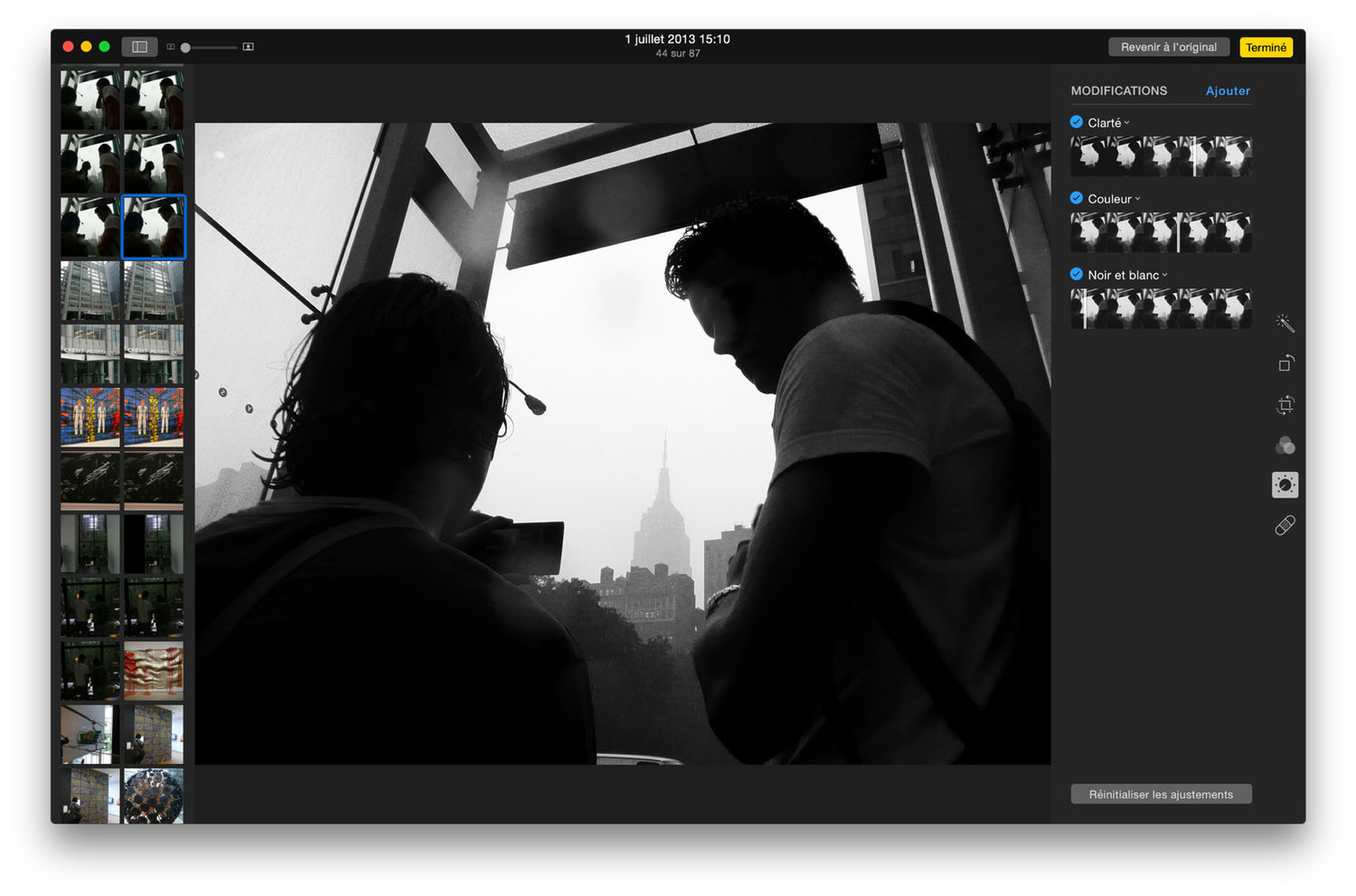
I’m not going to do a review of the app, I’ll let people like Alex Guyot from Macstories doing this way better than I could. But here is a TL;DR version of it : If you have an iPhone and a Mac, and looking for a solution to keep all of your picture safe and avalaible easily on all your devices, this is the way to go.
Now, if you excuse me, I have to upload 5000 pictures over my very slow ADSL connexion (my peak upload speed is 70 kB/s). See you in 2 weeks!
The CIA campaign to steal Apple's secrets
Jeremy Scahill and Josh Begley, from The Intercept:
Researchers working with the Central Intelligence Agency have conducted a multi-year, sustained effort to break the security of Apple’s iPhones and iPads, according to top-secret documents obtained by The Intercept. […] By targeting essential security keys used to encrypt data stored on Apple’s devices, the researchers have sought to thwart the company’s attempts to provide mobile security to hundreds of millions of Apple customers across the globe. Studying both “physical” and “non-invasive” techniques, U.S. government-sponsored research has been aimed at discovering ways to decrypt and ultimately penetrate Apple’s encrypted firmware. This could enable spies to plant malicious code on Apple devices and seek out potential vulnerabilities in other parts of the iPhone and iPad currently masked by encryption.
This isn’t an unexpected revelation, with programs like XKeyScore and Prism, you could expect that the NSA or the CIA would target a company like Apple. What is more surprising is how they did it, and mostly one of the tool they used : XCode
The security researchers also claimed they had created a modified version of Apple’s proprietary software development tool, Xcode, which could sneak surveillance backdoors into any apps or programs created using the tool. Xcode, which is distributed by Apple to hundreds of thousands of developers, is used to create apps that are sold through Apple’s App Store. The modified version of Xcode, the researchers claimed, could enable spies to steal passwords and grab messages on infected devices. Researchers also claimed the modified Xcode could “force all iOS applications to send embedded data to a listening post.” It remains unclear how intelligence agencies would get developers to use the poisoned version of Xcode.
You can expect the reaction of iOS and MacOS developers. This is from Marco Arment:
Unpatriotic? Absolutely. Terrorism? Maybe. But those don’t quite capture what this really is: war. The United States intelligence agencies are at war against all U.S. citizens. President Obama, “the Constitutional Law president,” not only lets it happen, but supports it. Edward Snowden continues to be much more of national hero and a true American patriot than the President. And I see no future Presidential candidates in either party who are likely to be any better. I’ve said it before: history will not be kind to Obama on this.
But this kind of policy doesn’t lead to the CIA goal of making all of the information be easily readable by them:
As corporations increasingly integrate default encryption methods and companies like Apple incorporate their own indigenous encryption technologies into easy-to-use text, voice and video communication platforms, the U.S. and British governments are panicking. “Encryption threatens to lead all of us to a very dark place,” declared FBI Director James Comey in an October 2014 lecture at the Brookings Institution. Citing the recent moves by Apple to strengthen default encryption on its operating systems, and commitments by Google to incorporate such tools, Comey said, “This means the companies themselves won’t be able to unlock phones, laptops, and tablets to reveal photos, documents, e-mail, and recordings stored within.”
What led to this situation is the previous attacks made by the U.S. Government to illegally access the private data of millions (Apple said on Monday that it has sold more than 700 millions iPhones) of people, making no distinction between U.S. Citizens & its allies, and “terrorists”. The information that could previously be read when needed (a police investigation, a imminent threat to the National Security) by a simple warrant delivered by a judge now cannot be read at all, no matter what the urgency and the will of Apple.
“Encryption isn’t just a technical feature; it’s a marketing pitch,” Comey added. “But it will have very serious consequences for law enforcement and national security agencies at all levels. Sophisticated criminals will come to count on these means of evading detection. It’s the equivalent of a closet that can’t be opened. A safe that can’t be cracked.”
You can ask Tim Cook if that’s what he wanted when he revealed the new security features in iOS 8. I’m sure you know his answer.
“Obama’s comments were dripping with hypocrisy,” says Trevor Timm, executive director of the Freedom of the Press Foundation. “Don’t get me wrong, his actual criticism of China for attempting to force tech companies to install backdoors was spot on — now if only he would apply what he said to his own government. Since he now knows backdooring encryption is a terrible policy that will damage cybersecurity, privacy, and the economy, why won’t he order the FBI and NSA to stop pushing for it as well?”
This is what seems to be a good advice.