Apple announces its new iPad and Mac lineup
Even if Apple spoiled its event the day before it has happened, it has still a few things to announces. More precisely, it has 5 products to announce: (Y)OSX Yosemite, iOS 8.1, new iPads, iMac Retina and the Mac Mini.
OSX Yosemite
Not new things to see since WWDC (except iTunes 12), but Craig Federighi took some time to recap all the new features that was introduced this summer. If you want more details, you can read John Siracusa’s extensive review on Ars Technica (be careful, it’s a 26,485 words behemoth) or see the new features on Apple’s website.
Of course, the features that I’m the most exited of are Handoff and Continuity, but, since I’m still not a Mac user (I’ll explain everything a bit later), I’m not very concerned by those.
iOS 8.1
iOS 8.1 brings Apple Pay in U.S (we’re still waiting for a release date in Europe, where most point of sale are equipped with NFC readers), iCloud Photos in beta, SMS Handoff with iPad (yayyy!) and should squash some bugs (Which ones? I don’t know yet). It’s coming on Monday.
The new iPad Air and iPad Mini
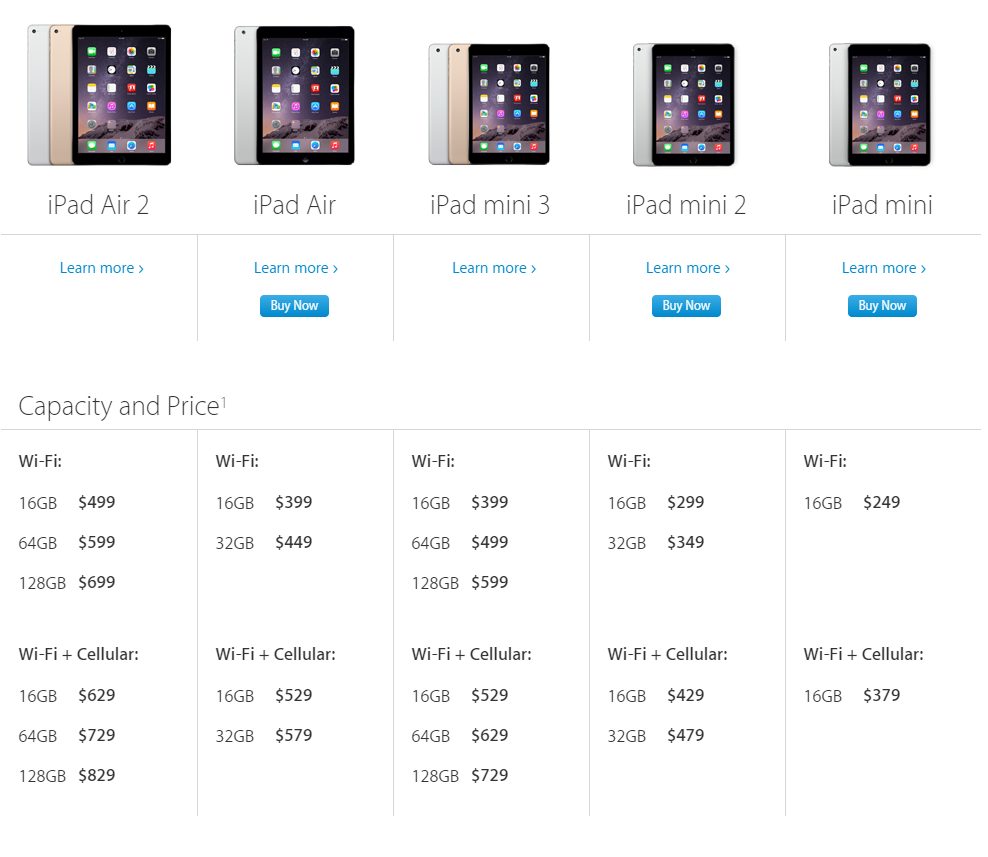
Not very much to say about them; iPad Air 2 is lighter and thinner than iPad Air 1, rocks an A8X processor who increases dramatically the graphics performance compared to the A7 processor (which was already an huge improvement), and has Touch ID. That’s pretty much all. And Apple spoke about the iPad Mini 3 (I have the Mini 2) for about 10 seconds, which, I think, is still less than when they spoke about the last iPod Touch update. It’s quite a shame. You can pre-order them on Friday 17 (tomorrow), and they are shipping next week.
iMac Retina

As it was expected, Apple released a retina version of its iMac, with a stunning 5K display (as if 4K wasn’t enough). Since Intel is behind the schedule to deliver its new Broadwell processors, there is not much improvements under the hood except for the screen : the “classic” iMacs weren’t updated, as the entire lineup of Macbooks (I’m desperately waiting for a Broadwell Macbook, either the Pro or the Air, to make the switch to MacOS.)
Mac Mini
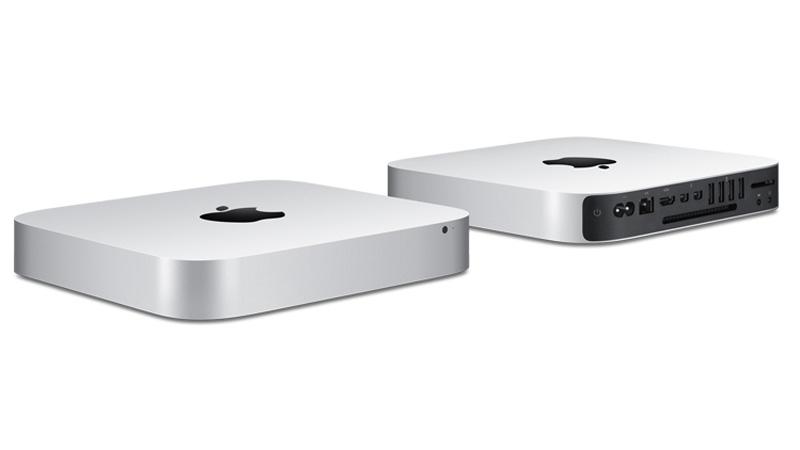
After two years, the Mac Mini is given an Haswell refresh and a price drop. This is a interesting option for a light desktop computer (to replace my parents’ 2006 iMac, which is stuck on Snow Leopard, and takes about 5 minutes to boot.)
Facebook Introduces Safety Check
Facebook :
In times of disaster or crisis, people turn to Facebook to check on loved ones and get updates. It is in these moments that communication is most critical both for people in the affected areas and for their friends and families anxious for news. We want to provide a helpful tool that people can use when major disasters strike, so we’ve created Safety Check – a simple and easy way to say you’re safe and check on others.
This is actually a great idea, being able to check for family members or close friends in case of natural disasters or huge crisis (if there’s still Internet, of course.)
The "Double Irish" might be over
Re/Code :
“Ireland’s plan to close a “Double Irish” tax loophole could cost U.S. companies including Apple and Google billions of dollars, although a new break and pressure to tackle tax avoidance elsewhere means they are unlikely to decamp.”
Finally, the E.U is taking some actions against tax evasion taking place in Ireland, Luxembourg and Netherlands. It’s time to end the economical disadvantaged induced by those taxes policies, whether it’s the" Double Irish" or the “Dutch Sandwich”, or anything else.
For those unfamiliar with this topic, those countries took their taxes policies as a mean to increase their economical competitiveness, as tax heavens countries like Bermudas do (but with higher tax rates, and with better transparency rules to not be classified as tax heavens). In a globalized world, this should not poses huge problems, individual States should be able to take some actions against tax evasions. This is what’s happening in the U.S, where the government can take some actions to avoid those tax evasions for domestic profits (they have a bit less power concerning international profits). But being in the E.U, and more importantly, in the Schengen and/or the Euro zone changes everything, because there is almost absolutely no borders between it’s members (which can be a wonderful thing, trust me), and you can operate freely in France or Germany with a company based in Ireland or Luxembourg (This is what Microsoft or Amazon do). This means that, when I buy something on Amazon.fr, the transaction is made between me and Amazon EU S.A.R.L. in Luxembourg, and not Amazon France. So, the French state doesn’t see any of my money (except the VAT, 20%), even if I made the purchase in France. The only purpose of Amazon France is to operate its warehouses and pay its workers. Also, if a French ad firm want to buy some ad spots on Google, it make a deal with Google Ireland, and not Google France.
I could write something more about why (moderate) taxation is important, but you have just to understand that the trucks that Amazon uses to deliver its goods, and all the infrastructures, were paid with theses taxes. Everyone has to contribute to the effort, and forgetting this is something that I cannot understand.
Anyways, back to the point :
“The question is where do you go to? There’s nowhere else in the European Union. It’s just getting too hot,” said George Bull, head of the tax practice at advisory group Baker Tilly.
This proves that there was only a few countries that was making this tax evasion possible, and not that there was only a handful of countries with very high taxes. But this also proves that the EU is a mess when it comes to imposition1. And this have to change.
And, to conclude all of this :
The impact on companies’ profits will be reduced by a new scheme announced by Noonan under which profits linked to the exploitation of patents will attract lower tax rates. Britain already has such a scheme, under which profits linked even tangentially to a patent can face a tax rate of 10 percent.
If you were seeking a new loophole, the Irish government has your back!
-
See this table on “Adjusted top statutory tax rate on corporate income, 1995–2014”, Eurostat ↩︎
This Is The Nexus Player
The Nexus Player takes the shape of a sleek-looking puck around 4.7-inches in diameter. It comes with a tiny remote with just a few buttons on it, one of which allows you to enable a microphone to perform a voice search — it’s actually a lot like what you’d find with Amazon’s Fire TV. The box includes 8GB of internal storage and is able to stream over 802.11ac Wi-Fi, which is the newest standard out there right now. The Nexus Player also supports a game controller, but it’s sold separately.
This seems to be a very cool gadget : the Android TV interface is sleek, and the Player looks great. BUT, I think it misses two features :
An Ethernet Port : Because, if you’re trying to stream a full 1080p movie on Wi-Fi, it’s just gonna choke to death, and, even if 802.11ac is better, not everyone has a router compatible with it.
An Audio-Out jack port on the remote : I discovered this feature with the Roku 3, and it’s great : I’m able to watch everything I want (action movie with big explosions for example) at the hour I want, without annoying people whit the sound.
So, maybe I don’t need an Nexus Player. Maybe I just need a Roku 3 with Android TV (and a better Plex app, which Android TV has, not Roku).