Is your brain really like a computer?
As I’m reading Nick Bostrom’s Superintelligence, I found this article from Aeon1 about the brain and the bad analogy it suffers from computers.
In it, Robert Epstein writes that brains are not at all like computers, but their own organic things. For example, they don’t store information like computers: the author asked people to draw from memory 1$ bills and then to draw them with a reference. The results vastly differ, the first draw being very sparse and the second much more elaborate2, showing that our brain has trouble to store that kind of information, unlike computers who don’t have any problem to do it.
Then, the author moves to a different thing: the idea of downloading your brain to a computer. And this is where the article rang a bell: this is a subject that Bostrom talks about in his book, but focusing mainly on the technical difficulties of doing it: how to scan a brain down to the protein scale, how to get the sufficient processing power to run it, …
But here, the author makes a totally different point: you just can’t do it.
This is because your brain and a computer aren’t the same things at all, not dealing with the same kind of things : you can’t store memories like a computer can, as you don’t deal with situations like a computer does: when you walk, you don’t calculate the size between your steps, the inclination of your legs, your balance, et cetera. You just do it; as a computer has to all of those things3.
The author then points out to Stephen Rose book4 : The future of the brain, who shows that to understand the current state of the brain, you have to get its entire history and the social context of its owner, because you can’t just replicate it like a digitized file : by itself the brain is just cells (neurons) interconnected (synapses), and cells can’t just store things.
There is a piece missing in our understanding of our brain — something that we will probably not get until a century5 — that make things work. But thinking that they work like computers could refrain it.
-
Thanks to Farnam Street “Brain Food” mailing list. You should subscribe to it. ↩︎
-
You should check the illustration on the article ↩︎
-
That I didn’t read and don’t know the worth. But it has good ratings on Amazon! ↩︎
-
I have some doubts about this, but first, I have to finish Bostrom book. ↩︎
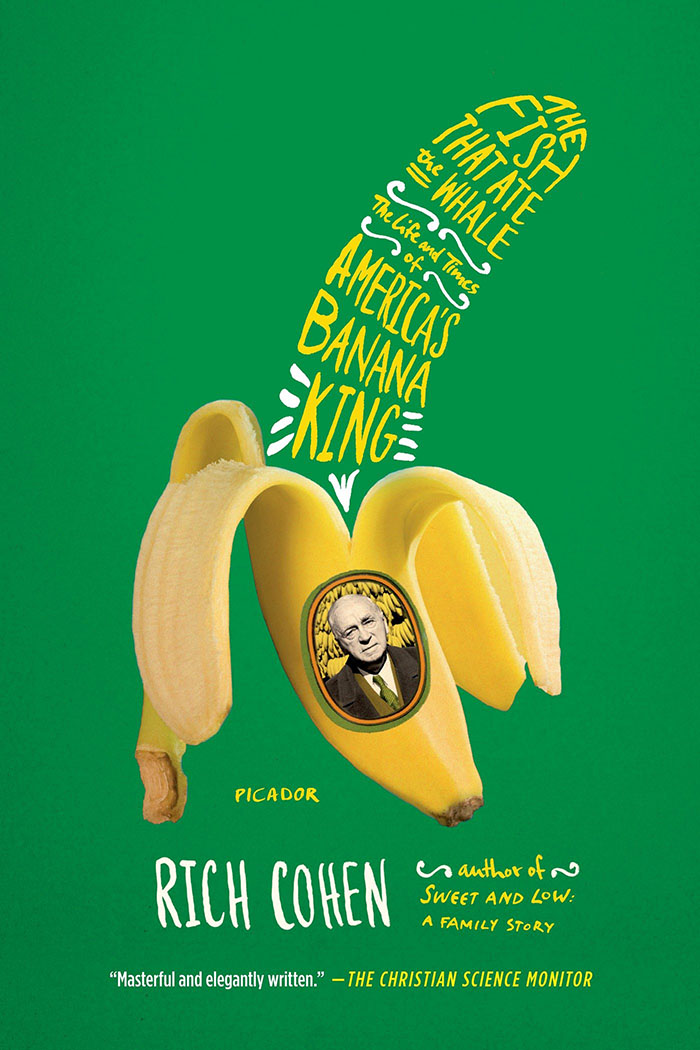
Rich Cohen - The Fish That Ate The Whale
You may have casually heard the expression “Banana Republic” in a conversation, understanding vaguely its meaning but not really grasping where does it comes from, or why it does have this connotation.
If you take a dictionary, you would find this definition :
A small nation, especially in Central America, dependent on one crop or the influx of foreign capital.
Well, okay, but why is it used in a pejorative way? And why “Banana”, not something like a “Coffee Republic” or a “Sugar Cane Republic”?
This is because you didn’t get the whole story.
Meet Sam “The Banana Man” Zemmuray.
In his life, Samuel “The Banana Man” Zemmuray witnessed the wake of the first multinationals, the rise and the instability of Central America, the first and second world war, the cold war and the wake of the CIA. But he did not only watch those things happen, he was actively involved in them.
And this is much more impressive when you consider that he began as a peasant, and went single-handedly to the top of the world, being the only person competent in managing the biggest corporation of his time and even a kingmaker in some countries.
Now is the moment you’re wondering why you never heard of Zemmuray before. Don’t worry, you’re not the only one.
I read about him first in Mastery I believe, being presented “The fish that ate the whale”, the guy who started selling a bunch ripe bananas thrown away by United Fruit and ended up owning and controlling this same company, the behemoth who started the trade.
But Zemmuray life isn’t limited to this feat. He made the banana the most consumed fruit in the world, produced and sold at dirt cheap prices, even if it was a luxury item at the start of the trade. He also deeply transformed South America, being at the origin of the gringo’s reputation, and going so far as indirectly starting the Cuban revolution. When you see what the CIA did in the cold war in Latin America, you can see his shadow behind, trying to protect his interests, going so far as handling the smuggling of the weapons to Honduras and the Bay of Pigs. If you go further east, you’ll still find his fingerprint in Israël, a country he heavily helped to create.
What you will find in this book is the life of a man who wanted everything and got more, a man who stayed true to his principles, ho was willing to get his hands dirty to achieve the things that he wanted, finding solutions that no one could have thought, circumventing the problems when they couldn’t be directly torn down.
If you didn’t know Sam Zemmuray, now is the time.
Buy this book.
 This article is part of a series called The Book Corner, where I post short reviews of books that I found on the internet and thought they were worth sharing. If you’re interested, you can find more on this page.
As a young foreign student, I’m looking to perfect my writing. If you have some time to give me feedback about this article or anything else, please reach out on Twitter or via email. This is greatly appreciated. Thanks!
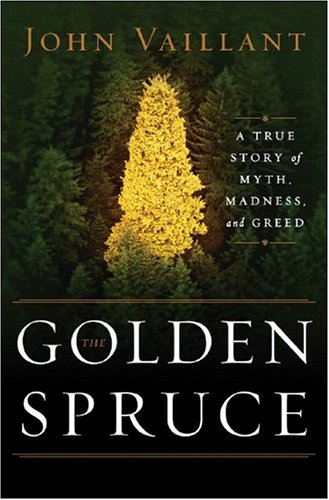
John Vaillant - The Golden Spruce
The first work from John Vaillant that I heard of was The Tiger, a story about the last great tiger in Siberia and of the mens who killed it. If the story looks interesting by itself, what was the most striking in this book was the amount of background and the depth of information in it; not only you learn about the story of how this beast was killed and why, but also the mindset of the people in this remote part of the world, the psychology of the animal, and much much more.The first work from John Vaillant that I heard of was The Tiger, a story about the last great tiger in Siberia and of the men who killed it. If the story looks interesting by itself, what was the most striking in this book was the amount of background and the depth of information in it; not only you learn about the story of how this beast was killed and why, but also the mindset of the people in this remote part of the world, the psychology of the animal, and much much more.
So that’s why, when I stumbled upon The Golden Spruce, I knew I’ll spend a great time.
The Great Spruce is Vaillant first book. The story is about why this tree, an oddity grown in the Queen Charlotte Island in British Columbia, Canada, was felled by Grant Hadwin, a logger-turned environmentalist, who wanted to make a point about the practices used by big logging companies like clearcutting and raise awareness on the subject.
But, like other Vaillant’s books, The Golden Spruce is way more than that. It’s a thorough account of the logging industry, from the first English settlers to nowadays; a description of the state of Native Americans in the US and Canada; but also a depiction of the North American rainforest, or what it’s left of, and it’s population: the biggest and tallest trees on earth, the ferocity of the elements, it’s diversity, …
This is why I love Vaillant’s books. He goes way deeper than the initial story to give a proper explanation of the event: the context, the mindset of its actors, … And because it’s linked to the initial story, it’s compelling : you want to find more with him: why this tree was so special for the island inhabitants, why the logging industry is so aggressive, why Hadwin thought it was a good idea to do it, who he was and how he did it, …
After I’ve finished it, I was happy to find that I could get the same kind of feeling that I got last summer when I finished The Tiger : knowing about something fascinating I had no idea happened, and having a better account of how people think and act like they do.
 Buy it on Amazon
This article is part of a series called The Book Corner, where I post short reviews of books that I found on the internet and thought they were worth sharing. If you’re interested, you can find more on this page.
As a young foreign student, I’m looking to perfect my writing. If you have some time to give me feedback about this article or anything else, please reach out on Twitter or via email. This is greatly appreciated. Thanks!
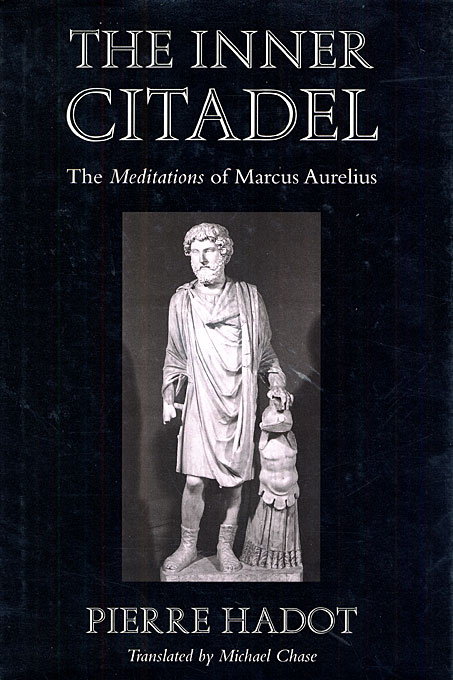
Pierre Hadot - The Inner Citadel
Background
If there is someone who deeply influenced me in the last 6 months, it’s Ryan Holiday. Last summer, I stumbled on his monthly reading newsletter (you should subscribe here, it’s well worth it), and I found some great books to read. But if you have to start somewhere, go to his Reading List, and you will find some jewels.
The first book from his list is Marcus Aurelius “Meditations”, who he describes as :
To me, this is not only one of greatest books ever written but perhaps the only book of its kind. Just imagine: the private thoughts of the most powerful man in the world, admonishing himself on how to be better, more just, more immune to temptation, wiser. It is the definitive text on self-discipline, personal ethics, humility, self-actualization, and strength.
After this presentation, the only reasonable thing to do was to read it.
So I bought an abridged version of it in French last summer1. I quite liked it, but I didn’t fully understand what Marcus Aurelius meant in some paragraphs, so this wasn’t the earth-shattering book that I was promised.
Still intrigued by it, I decided in March to get a copy of the next book on the subject, who purposely could explain to me what Marcus Aurelius really thought when he wrote it, why he uses this style of writing, and, by extent, what really is stoicism.
This book was Pierre Hadot’s The Inner Citadel2, and I really recommend it to you if you’re remotely interested in stoicism3.
The book
If you first open Meditations, you will probably find yourself a bit lost. Why does the author write like this? What does he truly means when he says those things?
This is because this book wasn’t meant to be read by other people that the author himself. What you will read are excerpts from his personal journal that have been saved from oblivion. That’s why you will find him repeating the same things over and over in the book: he uses it as a way for himself to remember those principles and to apply them every day.
So, for a stranger, this could be a bit confusing, more so if you consider that the book was written almost 2000 years ago, and there are still parts that are forever lost. Take for example this excerpt:
“Discard your thirst for books, so that you won’t die in bitterness, but in cheerfulness and truth, grateful to the gods from the bottom of your heart.” (Meditations, Book 2, III)
What does he mean? Why on earth someone like Ryan Holiday, who read an unfathomable amount of books every month, would abide by this author and stoicism? This doesn’t make sense!
This is because Marcus Aurelius doesn’t write this for you, he writes it for himself. When he wrote this sentence, he was reaching the end of his life. So, he wanted to use his time left to act. Now, the sentence doesn’t mean the same thing anymore and doesn’t conflict with the book thirst that you should have in the early days of your life (who should extend in its entirety).
This is one of the insights that will give you Pierre Hadot’s book. It does a great job at explaining every difficulty that you could stumble on when reading it.
He goes to great lengths to describe difficult concepts and making them accessible. He also compares Marcus Aurelius writing to Epictetus’, from which he deeply inspired himself from, and use it to give a very thorough account of the stoic philosophy.
This is why if you’re interested in Marcus Aurelius book, you should read this one first. It removes the possibility of a misunderstanding, and give some rich background to the whole piece.
 |
 |
|---|---|
| Buy it on Amazon | Buy the French version |
This article is part of a series called The Book Corner, where I post short reviews of books that I found on the internet and thought they were worth sharing. If you’re interested, you can find more on this page.
As a young foreign student, I’m looking to perfect my writing. If you have some time to give me feedback about this article or anything else, please reach out on Twitter or via email. This is greatly appreciated. Thanks!
-
It was an e-book, so I wasn’t really aware at the time that it was the abridged version. Shame on me. ↩︎
-
This book has two titles in the french version. The first one vas La citadelle intérieure, used for the english translation; and the second one, used for the re-edition, was Introduction aux Pensées de Marc Aurèle, who carries way better the true purpose of this book. ↩︎
-
As a disclaimer : I only read the original version in French, so I can’t vouch on the quality of the translation. If you are a francophone, you can find this version here. ↩︎